
Spin Rummy Mistakes to Avoid: 7 Costly Blunders to Stop Today (2026)

Description
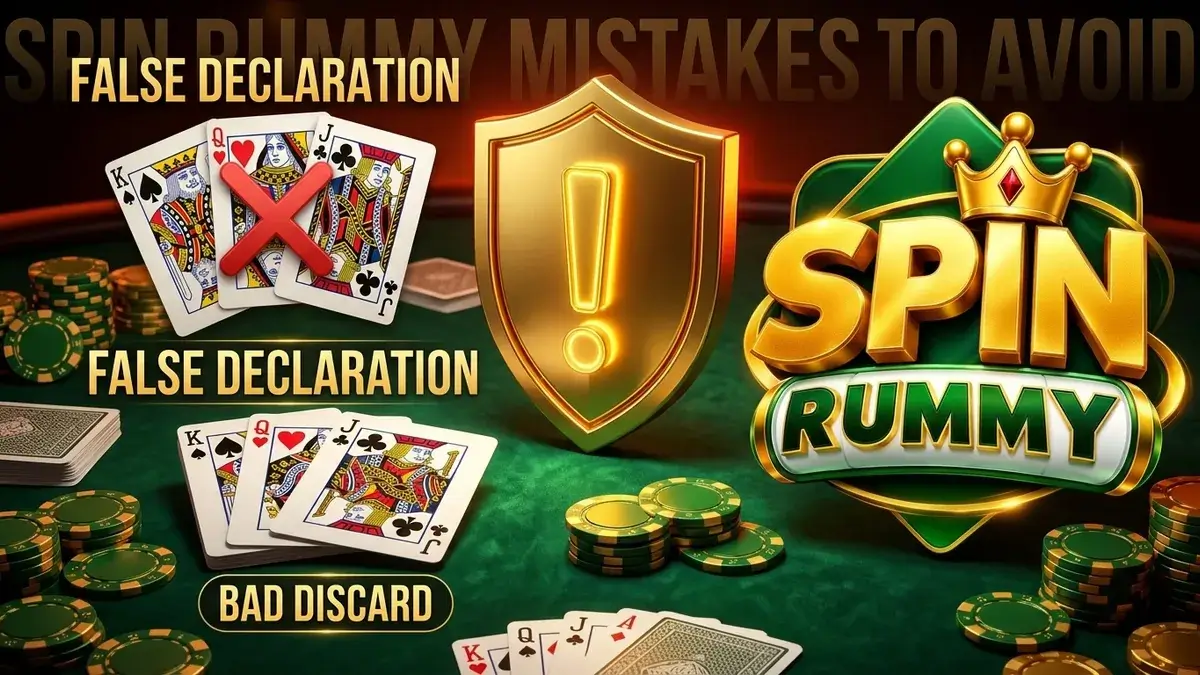
- 1. Overview of Spin Rummy Mistakes to Avoid
- 2. The Psychology of Tactical Blunders in Rummy
- 3. 7 Costly Blunders in Spin Rummy Mistakes to Avoid
- 4. Blunder Impact & Mitigation Matrix
- 5. The Hazard of Discard Telegraphing
- 6. Overcoming Stubbornness: Mastering the Drop
- 7. Frequently Asked Questions (FAQ)
🛡️ Protect Your Hand from Critical Errors
Card games are won by making fewer mistakes than your opponents. In this diagnostic guide on Spin Rummy Mistakes to Avoid, we analyze the 7 most damaging blunders players commit and how to eliminate them.
Overview of Spin Rummy Mistakes to Avoid
Welcome to our comprehensive strategic audit: Spin Rummy Mistakes to Avoid. In 13-card Indian rummy, a single unforced error—such as holding an unlinked King too long or forgetting to verify your pure sequence—can turn a commanding lead into an immediate 80-point penalty.
The beauty of playing on Spin Rummy is that you practice with 100% free virtual practice chips. You have complete freedom to diagnose your gameplay flaws, experiment with disciplined habits, and build true card mastery without monetary stress or anxiety.
As explored in cognitive science research on cognitive biases in strategic games, players frequently fall victim to sunk cost fallacies, holding onto deadwood cards simply because they have invested several turns pursuing them.
The Psychology of Tactical Blunders in Rummy
Why do even experienced card players commit costly blunders? Most errors stem from tunnel vision: focusing entirely on assembling your own combinations while completely ignoring what other players at the table are drawing and discarding.
By stepping back to observe the broader table dynamics, you anticipate opponent declarations, recognize when to drop defensively, and avoid feeding game-winning cards to rivals.
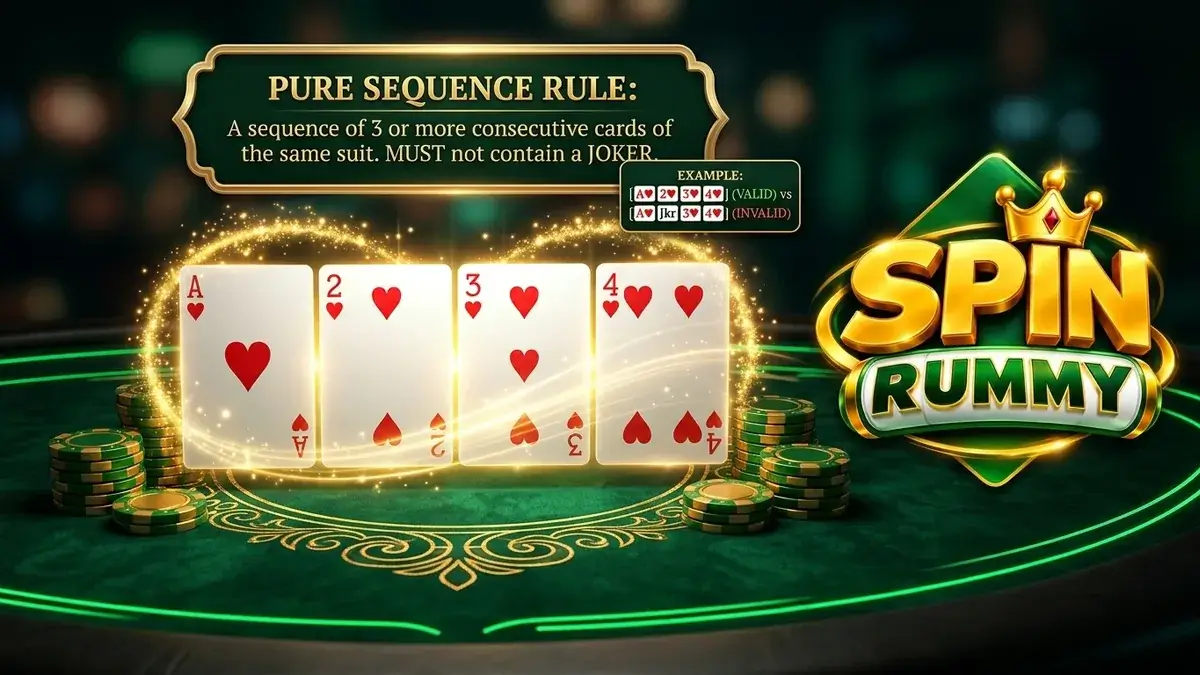
Spin Rummy Mistakes to Avoid sequence errors incorrect sets and duplicate suit blunders
7 Costly Blunders in Spin Rummy Mistakes to Avoid
Here are the 7 most damaging blunders analyzed in Spin Rummy Mistakes to Avoid:
- Blunder 1: Declaring Without a Pure Sequence: Submitting a show without at least one pure run without jokers is an instant 80-point penalty. Always double-check your pure run!
- Blunder 2: Hoarding Unconnected Face Cards: Keeping Kings, Queens, and Jacks in hopes of future runs inflates your deadwood. Discard unlinked face cards by turn 3.
- Blunder 3: Picking Blindly from the Open Pile: Taking cards from the open discard tray signals your target meld to opponents. Prefer the closed deck for stealth.
- Blunder 4: Duplicate Suits in a Set: Building a set like 8♠-8♠-8♥ using two decks invalidates the meld. All cards in a set must belong to distinct suits.
- Blunder 5: Refusing to Take the Early Drop: Stubbornly playing an unplayable deal turns a 20-point drop into a crushing 80-point loss.
- Blunder 6: Misinterpreting the Cut Joker: Overlooking that cards of the cut joker’s rank act as wild cards across all suits leads to wasted melds.
- Blunder 7: Discarding Cards Adjacent to Opponent Picks: If an opponent picked a 7♥, discarding an 8♥ or 6♥ on your next turn gives them an easy win.
Blunder Impact & Mitigation Matrix
| Common Error | Point Penalty Risk | Expert Prevention Strategy |
|---|---|---|
| Invalid Declaration | 80 Points Maximum | Verify pure sequence before dragging to Declare |
| Face Card Hoarding | 30 – 40 Deadwood Points | Discard disconnected A, K, Q by turn 3 |
| Refusing Early Drop | 60+ Unnecessary Points | Concede Turn 1 for 20 pts when holding 0 jokers |
The Hazard of Discard Telegraphing
Telegraphing occurs when your discards tell observant opponents exactly what your hand looks like. If you discard a 9♣ and then an 8♣, opponents know you have abandoned clubs and may hold diamonds or hearts.
Vary your discard pattern and use baiting techniques to keep rivals guessing. Master pure sequence building in our Pure Sequence Guide.
Overcoming Stubbornness: Mastering the Drop
Pride is the enemy of great card play. Accepting a 20-point drop is not quitting; it is an intelligent tactical sacrifice that keeps you in contention over a multi-hand series.
Review how points compound across matches in our Spin Rummy Points Calculation guide, or study the full rulebook on Spin Rummy Card Rules.
Frequently Asked Questions (FAQ)
What should I do if I am dealt zero jokers?
If you hold no jokers and no connecting cards for a pure sequence, taking a First Drop (20 points) is statistically the safest play.
Why can’t I have two cards of the same suit in a set?
Because a set is defined as cards of the same rank across different suits. Including two identical suits (e.g., two 7♦) violates standard rules.
How does Spin Rummy help prevent accidental declaration errors?
Our interface displays real-time meld validation warnings if your hand lacks a pure sequence before allowing declaration submission.
Where can I learn official terms and jargon?
Explore our comprehensive terminology dictionary on Spin Rummy Glossary Terms.
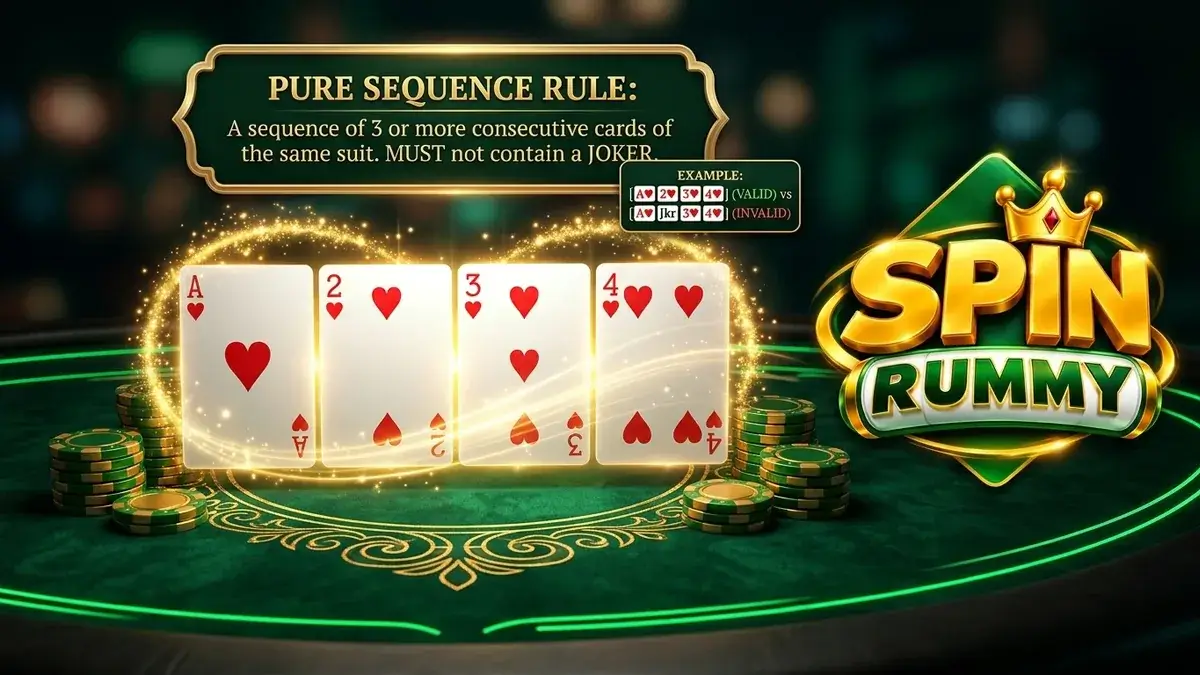
Spin Rummy Mistakes to Avoid declaring without pure sequence and invalid show penalties
🎰 Eliminate Card Blunders Risk-Free
Sharpen your card tactics on Spin Rummy free practice tables. Turn tactical errors into master winning strategies.
⚡ Play Spin Rummy Free NowRelated apps








Developer's apps
-
Recent Posts